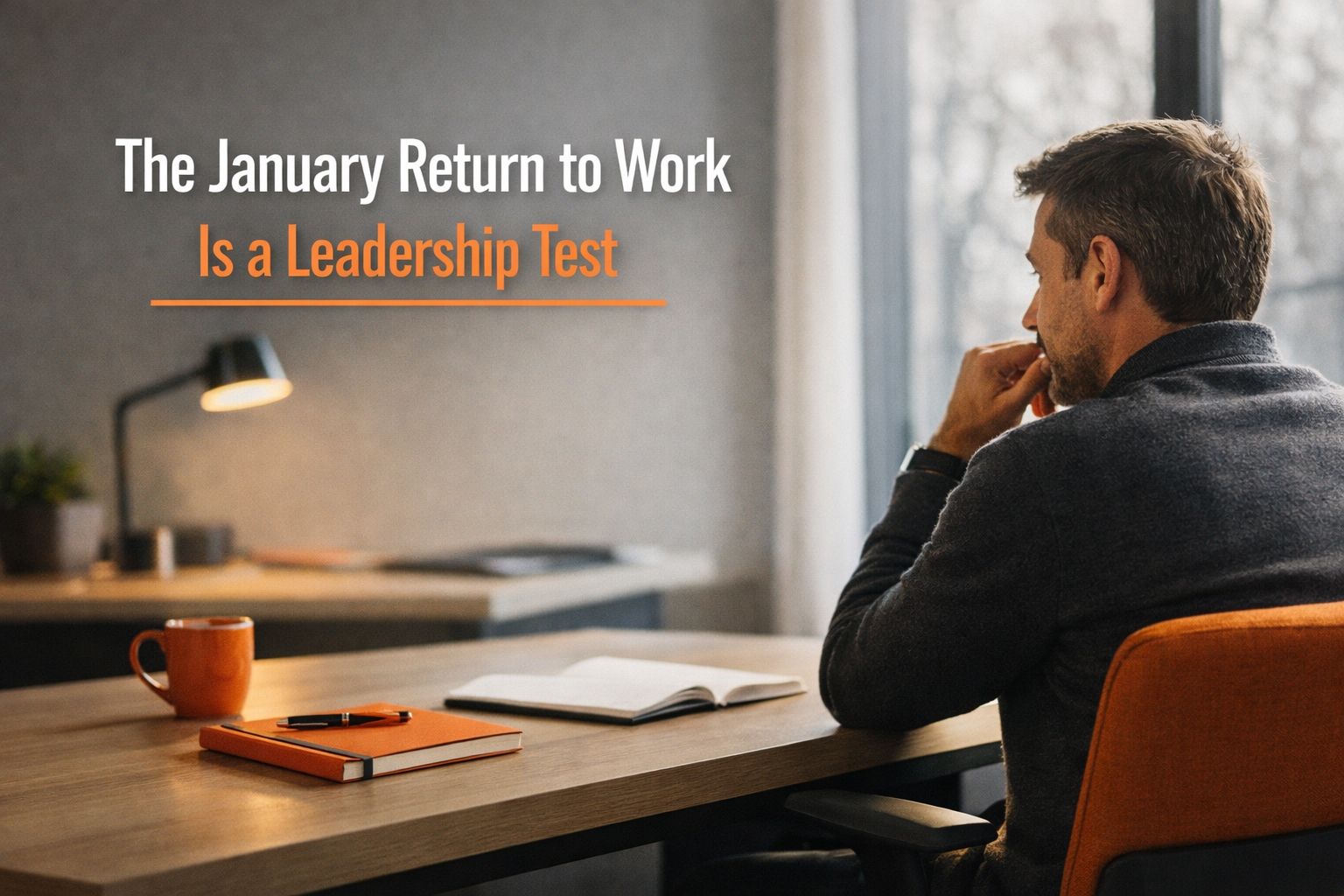
There’s something about the New Year that sharpens the edges. There’s a particular feeling that comes with the first working weeks of the year. The out-of-office is off. The diary opens. The quiet ambition of a new year sits alongside a slightly heavy sense of return. Not to a building, but to responsibility. To decisions. To the reality of work. And this is where “back to work” often gets misunderstood.
Because January isn’t about where we work from. It’s about how we return to work mentally, emotionally and operationally….and it’s the month where some of us suffer Blue Monday.
Yet, January Is a Reset, Whether We Use It or Not
The New Year creates a natural pause. A line in the sand. People come back with questions they don’t always say out loud:
- What’s expected of me this year?
- What actually matters?
- Can I do my best work here without burning out?
If those questions go unanswered, work resumes on autopilot. Same habits, same pressures, same inefficiencies……just in a new calendar year. Smart working treats January as a design moment, not just a restart.
Back to Work Is About Direction, Not Motion
Activity returns quickly in January. Emails fly. Meetings multiply. But motion isn’t the same as progress. Smart working asks leaders to slow the start slightly so people can speed up later. That means:
- Resetting priorities, not just targets
- Clarifying outcomes, not just workloads
- Being explicit about what good looks like now
- Removing legacy tasks that no longer earn their place
When people understand the why and the what, they don’t need pushing. They move with intent.
The Human Reality of January
People don’t return in January fully charged. They return with winter energy, family pressures, financial hangovers and a head full of reflection. Pretending otherwise is where performance quietly erodes. Smart working recognises that sustainable performance depends on psychological safety – the ability to ask questions, flag pressure early and challenge priorities without fear. That’s not softness. It’s how you avoid burnout in March and disengagement by summer.
Leadership Sets the Tone
How leaders show up in January matters more than any strategy document. When leaders:
- rush to fill diaries without resetting purpose
- reward busyness over impact
- avoid difficult prioritisation conversations
they signal that nothing has really changed. But, when they pause, listen and set direction with clarity, they create confidence. And confident teams perform better, for longer.
A Smarter Way Back
Going back to work after the New Year isn’t about re-establishing control or proving commitment. It’s about reconnecting people to meaning, focus and momentum. Smart working is simply this…..
Designing work so people can think clearly, work well and deliver what matters, especially at the start of the year, when the tone for everything else is being set.
Because how you come back in January shapes how the year unfolds.
January has a way of telling the truth.
If the return to work already feels rushed, heavy or slightly misaligned, it’s rarely about effort or commitment. It’s usually a sign that people are carrying uncertainty they haven’t had space to resolve. Clarity hasn’t quite landed. Priorities are competing. Leadership feels present, but not always steady. That’s the gap smart leadership fills when your team goes back to work after the New Year
When leaders know how to set direction without noise, create psychological safety without lowering standards, and make clear decisions when the pressure is real, work begins to feel different. Calmer. More focused. More human. People don’t just get through the year, they contribute properly to it.
Our Smart Leadership Programme exists for exactly this moment. It’s designed to help leaders build the thinking, confidence and capability that modern work demands – not theory, not slogans, but practical leadership that holds up in January, and still works when it’s March and everything is moving fast again.
If this New Year feels like an opportunity to lead more deliberately, we’d love to talk. Because how you lead at the start of the year quietly shapes everything that follows.