Taking the fear out of conversations – it’s the bit most Leadership Programmes Ignore!!
Most leadership programmes will happily teach you “how to have a difficult conversation”. They’ll give you a model……maybe three. Role plays! Acronyms! Frameworks! And yet, six months later, the same managers are still avoiding the same conversations. Why? Because the real blocker was never the model. It was the fear.
Fear Is What Warps Communication
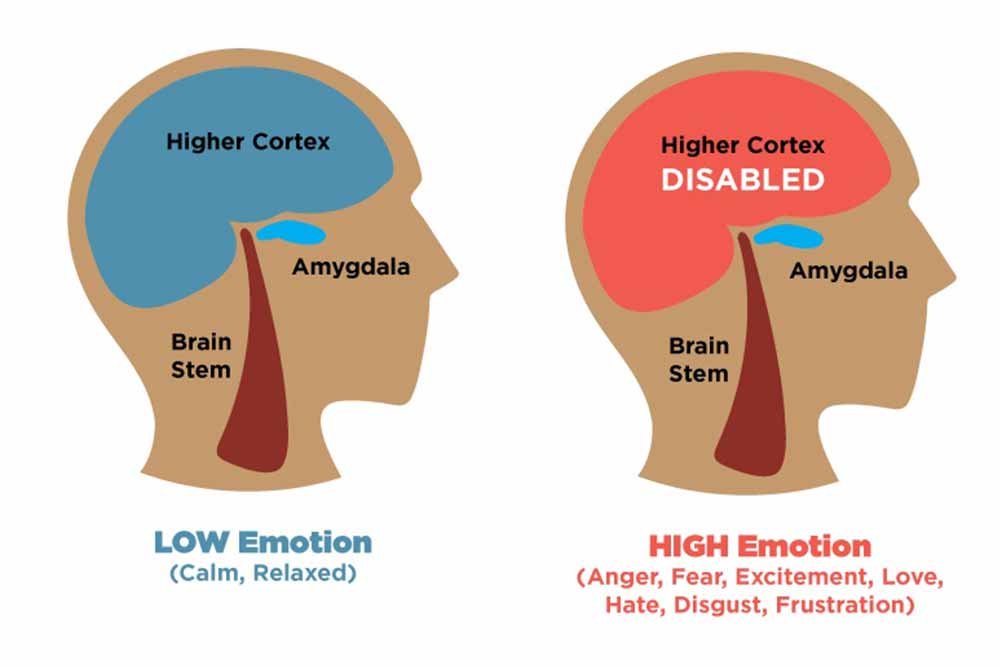
Fear hijacks the brain. Literally.
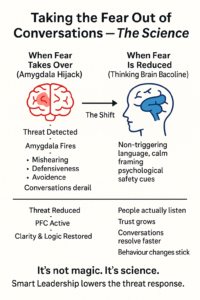
When we sense threat – criticism, conflict, rejection – the amygdala jumps in and takes over. It’s the brain’s alarm system. It was brilliant when we needed to outrun sabre-toothed tigers. Less useful when we’re trying to speak to Steve about turning up on time. Once the amygdala fires:
-
We mishear things.
-
We add meaning that wasn’t there.
-
We don’t absorb what was said.
-
We default to fight, flight or freeze.
No model on earth can compete with a hijacked threat response.
Most People Carry Old Fear – And It Shows Up at Work
Many adults are still shaped by early experiences of feeling:
-
rejected
-
not good enough
-
unwanted
-
alone
Those moments hurt, deeply and the brain learned one rule….. ‘Don’t relive that pain. Avoid anything that might trigger it’. So when a difficult conversation appears, the amygdala treats it like danger. Add grown-up fears like job security, status, financial pressure and the threat response ramps up even further.
But We Still Need These Conversations
Work doesn’t stop because we’re anxious. Performance issues don’t evaporate because we avoid them. Teams don’t magically sort themselves out. We still need to talk. We still need to address the issue. We still need to move things forward. So the real question becomes……..How do we lower the threat signal so the brain stays in “thinking mode”, not “panic mode”?
Reduce the Amygdala Spike With Non-Triggering Language
This is why our Smart Leadership approach deliberately uses:
-
calm, neutral framing
-
language that doesn’t feel like attack
-
clarity without judgement
-
a tone that keeps the conversation safe
This reduces the amygdala’s urge to jump in and “protect” the person. Which means:
-
they stay engaged
-
they hear the actual words
-
they respond like an adult, not a frightened 8-year-old
-
trust has a fighting chance to grow
You Can Teach Models All Day, But Without Fear Reduction They Don’t Work
You can give managers DESC, SBI, GROW or any neat acronym you like, but if their brain goes into threat mode, none of it will land. This is why organisations end up saying, “But we trained them six months ago…”
Yes, but you didn’t train them to manage the fear. You didn’t teach them how to keep the amygdala calm. And that’s the bit that actually changes behaviour.
If You Want Better Conversations, Start Here
-
Reduce the threat response.
-
Use language that keeps the amygdala quiet.
-
Help managers understand why fear hijacks communication.
-
Build trust before you need it.
Smart communication starts with safety, not scripts. Once fear steps aside, everything else becomes simpler:
- Better conversations.
- Quicker resolutions.
- More trust.
- Better performance.
It’s not magic. It’s science. And it works.
If this Blog resonated, here’s the simple truth – Your managers won’t magically start having better conversations without learning how to take the fear out of them. That’s exactly what our Open Leadership Programme does. We teach the science behind fear, threat responses and amygdala hijacks and how to keep conversations calm, clean and productive.
If you want leaders who stop avoiding the tough stuff and start communicating with confidence, this is the programme to book.
Spaces are limited.
Secure a place while you can.