The story we tell ourselves about the Titanic is neat and comforting. A great ship. a freak collision – an unavoidable tragedy. But that framing lets us off the hook – we need to understand the root cause!
To us, it’s often a film or a historical curiosity. In reality, more than 1,500 people lost their lives. Families were torn apart. Futures ended in the dark and the ice cold sea. And those deaths were not meaningless, because we did learn from them and we must continue to do so.
But, when you look at the disaster through the lens of root cause analysis, the narrative becomes far more unsettling. The iceberg did its damage. Everything after that was about design limits, assumptions and human judgement under pressure. That’s why the Titanic still matters. Not as a story, but as a responsibility.
A ship built for certainty, not resilience
The true technical root cause sits quietly beneath the waterline. As explored in the BBC documentary Titanic Sinks Tonight, the Titanic’s hull was not strong enough to withstand the kind of damage it sustained. The steel and rivets, brittle in freezing temperatures, failed not in one catastrophic tear but in a series of small compromises along the ship’s length. Water spilled into multiple compartments, and once it did, the design offered no way back.
The ship was magnificent, but it was designed for confidence, not failure. It assumed the world would behave as expected. That assumption matters.
Lifeboats weren’t missing. They were misunderstood.
One of the most enduring criticisms of Titanic is the lack of lifeboats. But even this needs reframing. At the time, maritime regulations did not require ships to carry enough lifeboats for everyone on board. The rules were based on tonnage, not passenger numbers and Titanic actually exceeded what the law demanded. More importantly, lifeboats were not seen as a full evacuation solution. The prevailing belief was that lifeboats would ferry passengers to nearby rescue ships and then return. They were connectors, not lifelines. That logic only holds if help is guaranteed and quickly available. It wasn’t.
Communication – the invisible failure
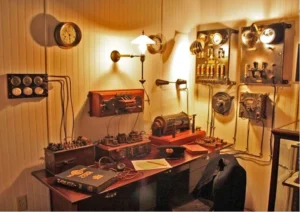
Wireless radio was still a relatively new technology in 1912. Critically, there was no international maritime law requiring ship radios to be manned 24 hours a day. So when Titanic began sending distress calls, the nearest ship, the Californian. had its radio operator off duty. The call went unheard. Rescue depended not on system design, but on chance. Help eventually came because the Carpathia’s radio operator happened to still be awake. In root cause terms, this is classic systemic fragility:
- Rescue assumptions without rescue guarantees
- Technology without protocols
- Capability without leadership discipline
Leadership under pressure and the psychology of denial
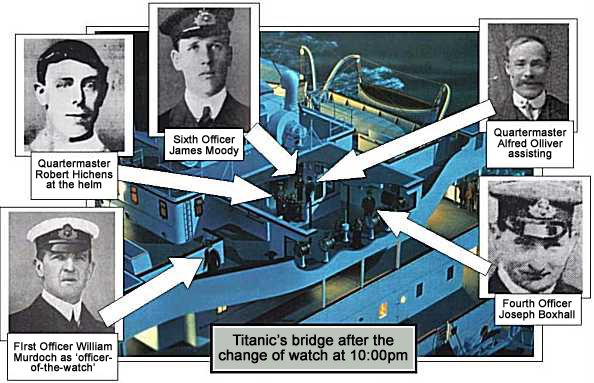
As the scale of the disaster became clear, another failure emerged – a deeply human one. Passengers were not clearly told that the ship was sinking. This wasn’t cruelty. It was psychology. For years, the crew — like the public had been told the ship was effectively unsinkable. That belief didn’t disappear on impact. It shaped how information was interpreted, how risk was assessed and how quickly conclusions were drawn.
In the early stages, even the captain was not certain the damage was fatal. Reports came in piece by piece. Assessments conflicted. The ship still felt stable. The lights were on. The engines were running. Normality lingered.
Under extreme uncertainty, leaders often default to reassurance. They fear panic. They cling to what feels familiar. Their own brains are still catching up with reality, and ambiguity feels safer than telling people something that might at that moment still be untrue.
Some officers were unclear about what needed to be done. Authority was assumed rather than explicitly exercised. Instructions varied. Roles were not clear before crisis hit – there had been no emergency practice.. So, communication lagged behind the tonnes of water the ship was taking on each second. Orders were inconsistent. Lifeboats were launched half-full. Precious minutes slipped away. This is what happens when confidence becomes belief, and belief becomes a psychological anchor.
When systems don’t surface clarity fast enough, the human mind fills the gap and not always in helpful ways. Even now leaders sometimes aren’t trained to communicate bad news decisively and psychological safety is absent at the very moment it’s needed most The amygdala takes over. Delay feels protective. It isn’t.
The real root cause, woven together
The iceberg was the trigger, not the cause. The Titanic sank because:
- Its design could not tolerate real-world failure
- Its systems relied on outdated assumptions
- Its communication lacked clarity and continuity
- Its leadership struggled under cognitive and emotional pressure
Each failure on its own might have been survivable. Together, they were fatal.
Why this still matters
The Titanic is not just a maritime tragedy. It’s a leadership one. Modern organisations can fail in a similar way:
- They design for best-case scenarios
- They assume information will flow when it matters
- They delay difficult conversations to keep people calm
- They discover too late that clarity, not comfort, saves time and in some cases, lives
Smart leadership is not about confidence when things are going well. It’s about clarity when they aren’t. Because when the going gets tough, people don’t need reassurance, they need truth, direction and leaders who are prepared, not just hopeful.
That’s the real lesson the Titanic still teaches us and that’s exactly what our Leadership Programme is designed to build. Not a theatre of confidence, not frameworks that fall apart under stress, but smart leadership – grounded, human and fit for when things don’t go to plan. If you’re leading people, teams or organisations in uncertain times, this really matters.
Get in touch to find out more about the next open leadership programme, starting in February.