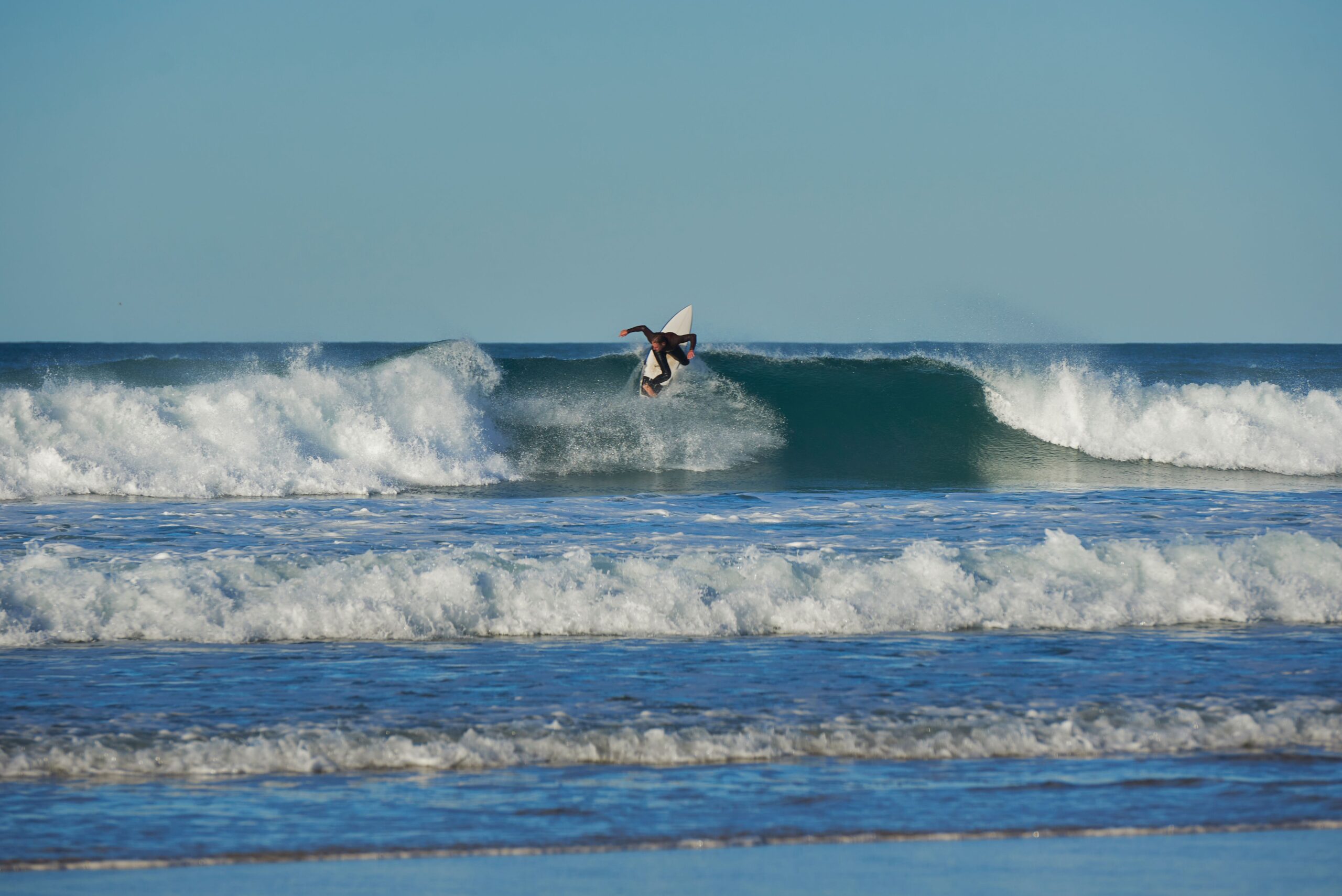
There is a saying that I often hear in Cornwall……you can’t stop the waves, but you can learn to surf. I come back to that line again and again in my work, because it sums up where so many organisations are right now.
Change used to arrive in neat, planned chunks. A restructure, a new system, a new leader, and then a period of calm to settle in. That calm has gone. In many organisations the next wave is already building before the last one has broken. Priorities shift at short notice. Structures change. Roles are redesigned. Much of what drives that change sits outside the organisation’s control.
So the question has changed. It used to be “how do we get through this change?” Now it is “how do we become people and teams who can keep delivering, whatever comes next?” That is a skill. And the good news is that skills can be learned.
Meet your amygdala
I always say that people don’t resist change, they resist uncertainty. And there is a very good reason for that, sitting deep in our brains.
The amygdala is our brain’s alarm system. Its job is to keep us safe, and it is brilliant at it. It scans constantly for threat and it treats uncertainty as a threat. When we don’t know what is coming, whether our role is safe, or who is making the decisions, the amygdala fires. Our bodies flood with stress chemicals, adrenaline and cortisol, and we move into fight, flight or freeze. The Amygdala is trying to keep you safe!
Biology not psychology
I see the amygdala at work every day with my dog, Dante. When he hears a strange noise outside, he doesn’t stop to work out what it is. He’s straight up, barking and guarding the door, and it takes him a good while to settle again. Most of the time it’s just the postman.
We do the same. When news lands of another r, our alarm goes off just as fast, and we often turn on whoever brings the news. We shoot the messenger, just as Dante barks at the postman who is only delivering the post. The alarm is brilliant when there really is danger. When it fires at every message and every messenger, it wears us out and damages the relationships we need to get through change together.
When the amygdala is in charge, the thinking part of our brain takes a back seat. We become less creative, less collaborative and more defensive and hold on to what we know. We read the worst into every message or teams pull back into their own safe corners.
The opposite is also true. When we feel safe, connected and that we belong, the brain releases the feel-good chemicals: serotonin, oxytocin, dopamine and endorphins. That is when we are able to solve problems, share ideas and help each other. So one of the most practical things any of us can do in times of change is to calm the alarm, in ourselves and in others.
Change happens on paper but transition happens inside us
William Bridges made a distinction I find really helpful. Change is the event……the new structure, the new way of working or the date the system goes live. Transition is the emotional journey people make to come to terms with it. Structure can change overnight, but the transition for the individual takes much longer.
Bridges describes three stages:
- Endings. Letting go of the old way, the old team, the old identity. Expect anger, denial, sadness and frustration. People need to grieve a little for what they have lost.
- The neutral zone. The messy middle bit, where the old has gone and the new doesn’t feel real yet. Anxiety and confusion are high, energy is low. This is where people can get stuck, sometimes for a long time. It is often called the valley of despair…some people never get out of it and choose to leave.
- New beginnings. People start to commit to the new way of working. Energy returns, and so does a sense of purpose.
Here is what I see again and again. Leaders are usually further through the journey than their teams, because they knew about the change months earlier. They are ready for new beginnings while their people are still at endings.
And in fast-moving organisations, a new wave arrives before people have climbed out of the wake of the last one! Some colleagues………often those who have been through the most change, stay emotionally stuck between the old and the new, unable to move on. That is exhausting for them and it holds the whole organisation back.
Out of the comfort zone, with a growth mindset
We all have a comfort zone. It feels safe and familiar, and that is exactly why we like it. The trouble is, when change comes, the comfort zone is the first thing to go. Step out of it and we pass through four zones:
- Comfort zone. Safe, familiar, in control. The job you have become accustomed to, the system you’ve used for years or subject you are most up to date with.
- Fear zone. Lacking confidence, looking for excuses, influenced by other people’s opinions. This is the amygdala talking.
- Learning zone. Facing challenges, picking up new skills, stretching what we can do.
- Growth zone. Finding new purpose, setting new goals, living out what we have learned.
The fear zone is where many people turn back. What carries us through it is mindset. Carol Dweck’s work on fixed and growth mindsets is so useful here.
With a fixed mindset, we believe our abilities are set. Challenges feel like threats, feedback feels like criticism, and other people’s success feels like a loss. We say “this is just how it is” or “I’ve always done it this way”.
With a growth mindset, we believe we can develop. Challenges become chances to learn, feedback becomes useful information, and effort is the path to getting better. We say “I can’t do this yet” and “what can I learn from this?”
That little word yet is powerful. Nobody arrives in a new structure fully skilled for it. A growth mindset gives us permission to be learners again and it is what moves us from the fear zone into the learning zone and on to growth.
Work at all three levels
Rick Maurer’s model is one I use with leaders all the time. He says resistance to change sits at three levels, and each needs a different response:
- “I don’t get it.” People need information. What is changing, what it means for me day to day, what will stop, and how my team links to others.
- “I don’t like it.” This is emotional. They might get it but they are worried about their role, their status, their colleagues. More information won’t fix it. Listening, acknowledging and giving people time will. It’s the what’s in it for me moment!
- “I don’t like you.” This is about trust. They often shoot the messenger or if people don’t trust the messenger, the best plan in the world won’t land.
Most change plans focus almost entirely on level one. Yet in fast-moving organisations, levels two and three are where things get stuck.
So what helps?
From my work with leadership teams, these make the biggest difference:
- Be clear and consistent. Set a direction, stick to it, and be honest about what will stop.
- Bring people in early. Share your thinking while it is still forming. People cope far better with “here’s where we are so far” than with silence.
- Be honest about what you don’t know. It builds more trust than a confident answer that later changes.
- Show people they have been heard. When you ask for views, let people see what happened as a result.
- Make it safe to speak up. Invite challenge, including about yourself, and thank people for it.
- Check the message has landed. Don’t assume it has travelled through every layer of the organisation. Ask.
- Acknowledge the human side. Change brings loss as well as opportunity. Name it.
- Coach people through it. Help people understand where they are on the journey and what will help them move forward.
What each of us owns
Leaders set the direction and create the conditions. But nobody can make the journey through change for us. Each of us owns how we go through it.
That can be a hard message, especially for people who feel change has been done to them. It is also a freeing one. We may not control the waves, but we control how we ride them. And coping with change is a skill we can build:
- Understand the bigger picture. Know the wider context your organisation works in and the pressures it faces. When you understand why the waves keep coming, they feel less personal and less random.
- Notice your amygdala. When you feel the alarm go off, pause. Name the feeling. Ask yourself what you actually know and what you are filling in with worst-case thinking.
- Know where you are on the journey. Are you still at endings? In the neutral zone? Being honest with yourself is the first step out of the valley.
- Focus on what you can control. Your attitude, your response, your relationships and your work and effort. Let go of the rest.
- Choose a growth mindset. Add yet to the end of the sentence. If change means a new role – treat the new role or the new team as a chance to learn.
- Stay connected. Connection calms the alarm and releases the happy chemicals like serotonin and oxtocin.
- Keep your purpose in sight. The people we serve still need us to deliver, whatever is happening inside the organisation.
- Look after yourself. Rest, movement, people who lift you. Resilience isn’t endless, so top it up.
The people who do best in fast-changing organisations still feel the fear. The difference is that they have strategies to work through it and they choose to move forward.
Learning to surf
Surfers don’t wait for the sea to calm down. They read the water, they position themselves, they fall off and get back on. Over time they come to enjoy the waves.
That is what I want for every leader and every team I work with. A shared understanding of why change keeps coming. Leaders who calm the alarm, share their thinking early and keep their promises. And individuals who take ownership of their own journey, with the tools to climb out of the valley and into new beginnings.
The waves will keep coming. Let’s learn to surf. Want a chat about your planned change? Get in touch