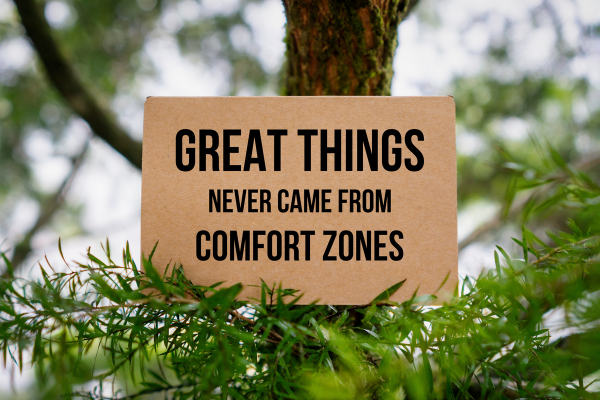
For thousands of years, the cave kept us safe.
To our Neanderthal ancestors, staying in the cave meant survival. Outside? Danger. Sabre-toothed cats. Ice storms. The unknown. But while the cave was safe, it was also limiting. There was no discovery inside. No new terrain. No progress.
Today, we don’t huddle around fires in prehistoric shelters, but we do live in metaphorical caves. They’re called comfort zones.
And if we want to grow, as leaders, teams, or organisations, we must step out of the cave.
The Comfort Zone: Safe, Familiar, and… Limiting
The comfort zone is that psychological “cave” where things feel manageable. You know what’s expected. You can predict outcomes. There’s low risk.
At work, this might look like:
- Taking on the same kinds of projects over and over.
- Avoiding presentations or high-stakes conversations.
- Sticking to old systems instead of testing new tools.
It feels smart to play it safe. But like our Neanderthal cousins, staying in the cave too long can mean missing the opportunities and breakthroughs just outside.
The Science: Why Your Brain Likes the Cave
The reason we retreat to comfort isn’t weakness. It’s wiring.
Your brain is built for survival, not success. The amygdala — a small almond-shaped part of your brain — is your fear detector. It lights up at the first sign of threat. And “threat” doesn’t just mean physical danger anymore. It includes:
- Public speaking
- Challenging authority
- Admitting you don’t know something
- Asking for help
From your amygdala’s point of view, leaving the cave could mean social rejection, failure, or embarrassment, all deeply uncomfortable experiences.
But here’s the truth: the amygdala overreacts.
Wild animals are not chasing you. You’re being called to grow.
The Zones: From Fear to Growth
Stepping out of your comfort zone doesn’t mean leaping unquestioningly into chaos. It’s a journey through zones:
- Comfort Zone
- “This is easy, I’ve got this.”
- You feel safe, but there’s no real development.
- Fear Zone
- “What if I mess up?”
- Self-doubt creeps in. Others might question your choices.
- Learning Zone
- “I didn’t know I could do that.”
- You acquire new skills, ideas, and resilience.
- Growth Zone
- “I’m doing things I never imagined.”
- This is where transformation happens, as a person, a professional, or a business.
The comfort zone is the cave. The fear zone is the edge of the forest. The learning zone is the trail. And the growth zone? That’s new land, new tools, new tribes, new power.
Breaking Comfort Zones at Work
In a smart working environment, growth doesn’t happen by accident. It happens by intention.
Here are just a few examples:
- A team stuck in legacy systems decides to implement AI tools like Xero, Dext, or Futrli. At first, there’s pushback. But with support and learning, they realise they’re saving time and offering better insights to clients.
- A quiet employee volunteers to lead a meeting. They sweat. They stumble. But they grow. Next month, they present to the board.
- A company switches to hybrid work. Managers must learn to lead remotely. It’s uncomfortable. But it creates a more inclusive, dynamic team culture.
The Neuroscience of Courage
Here’s the empowering bit.
Each time you act despite your fear, you shrink the power of the amygdala. This process is called exposure adaptation. Over time, your brain learns that giving feedback won’t get you ostracised. Speaking in public won’t kill you. Admitting you don’t know everything won’t collapse your career.
You start forming new neural pathways, reinforcing confidence, flexibility, and courage.
Brain Booster Exercise: “Step Beyond the Cave”
Here’s a challenge for your week:
Step 1: Draw Your Zones
On a piece of paper, draw four concentric circles and label them:
- Comfort Zone
- Fear Zone
- Learning Zone
- Growth Zone
Step 2: Add a Work Challenge
In each zone, list one action related to your current job or goals.
Example:
- Comfort: Using the same slide deck you’ve used 10 times.
- Fear: Asking a colleague for honest feedback.
- Learning: Trying a new storytelling technique in your next talk.
- Growth: Pitching your idea to the leadership team.
Step 3: Pick ONE Fear Zone action and do it this week.
Notice what your amygdala tells you. Then notice what happens. You’re rewiring your brain in real time.
Real Talk: Leadership Is Leaving the Cave First
If you lead a team, remember, your people will follow your example more than your instructions.
Leaders who stretch themselves create psychological permission for others to do the same. Break your own comfort zone, and your team will too.
Say:
- “This is new for me, but I’m trying it.”
- “I’m a little nervous, and that’s OK.”
- “Let’s experiment together.”
This is how you create a culture of courage and growth.
Final Thoughts: The Cave Is Comfortable, But the Future Isn’t There
Here’s the big takeaway:
The comfort zone might feel good. But all the good stuff, the career shifts, the personal breakthroughs, the game-changing ideas, they live outside the cave.
At the Smart Working Revolution, we don’t just encourage transformation. We design for it across our SMARTER Framework pillars: People, Process, Purpose, and Performance.
Breaking the comfort zone isn’t about being reckless. It’s about being ready. Ready for the real world of work, the one that rewards curiosity, adaptability, and bold thinking.
Call to Action
This week, leave your cave. One step. One challenge. One new learning.
Write it down. Face the fear. Step into growth.
Want to equip your teams to break their caves and evolve? Let’s talk. The Smart Working Revolution was built for bold thinkers, just like you.
To find out more about the SMARTER Framework, you can find out more on our website – The SMARTER Framework.
Or join one of our free online webinars, click here to book on – SWR Online Webinars.