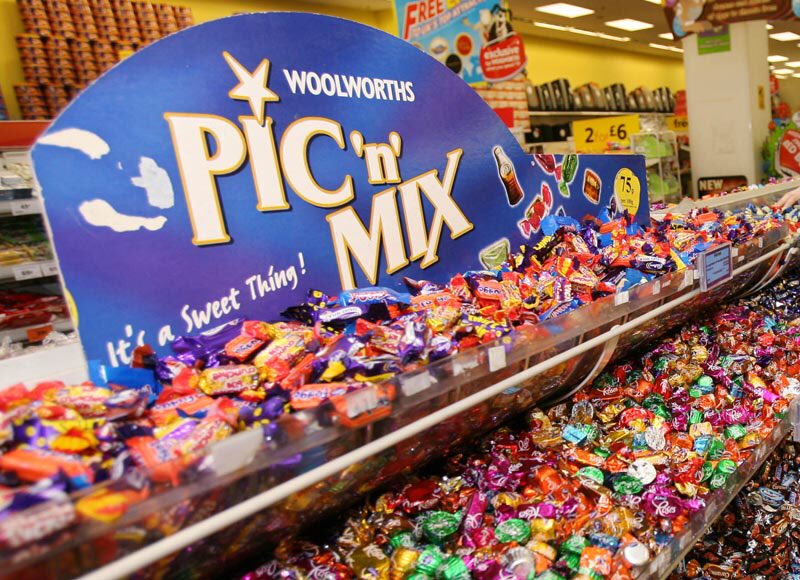
Long before SMARTER frameworks, leadership programmes or debates about brand versus customer experience, I learned one of my most enduring business lessons on the shop floor at Woolworths.
I was doing my management training and running the gifts and sweets shop in the old Eagle Centre in Derby. It sat alongside the big Woolworths store, whose manager mentored me. He trusted me, though, and largely left me to run the shop day-to-day because I was more than capable.
If you remember Woolworths properly, you’ll remember the pick and mix at the front of the store. Ours was generous. Colourful. Slightly chaotic. And governed by very clear brand rules: how the shelves were filled, how the sweets were displayed, how the signage worked. Woolworths knew its brand.
I followed those rules to the letter. Until I didn’t…….
Records, tapes and instinct
We also had a big records and tapes section. Every Friday evening I’d listen to Rosco’s Round Table on Radio One, make notes and come in on Saturday to order what I knew would land. That instinct paid off. We did very well. It was an early lesson in paying attention to what people actually want, not just what head office predicts. We were excelling with our customer experience.
Then we introduced a new line of luxury chocolates to our Pick and Mix line. They were genuinely lovely. The sort of thing you’d buy as a treat. And, much to our amazement – they didn’t sell.
Weeks went by. Stock sat there…….perfectly merchandised……completely ignored!
Wednesday, the A-board and a small rebellion
Steve, my mentor, had Wednesdays off. I’d already requested and been given permission to use an A-board outside the shop to advertise new records and tapes. So one Wednesday, while Steve was off, I made a decision. I wrote something simple on the board. Something like:
“Cosy up this evening with our luxury chocolates.”
Inside the shop, I added a few bits of fluorescent card to gently signpost where the chocolates actually were. Nothing dramatic. Nothing expensive. Definitely not brand-approved.
They sold like hot cakes. I did it again the following Wednesday. And the next. And the next. After a few weeks, Steve started saying, “Funny how those chocolates always sell well on a Wednesday.”
When brand meets reality
One morning Steve came in smiling. The Regional Manager’s wife had been shopping in Derby. She’d spotted the sign……bought the chocolates and gone home absolutely delighted ready to cuddle up on the sofa with her “cosy” luxury treat.
And that, of course, was the problem. We’d broken the brand rules.
The A-board message had to stop. The fluorescent cards had to go. Everything returned to the approved standard. But the lesson had already landed.
The lesson I never forgot
That moment taught me something I’ve carried into every role since – Brands don’t always do the job on their own. They give consistency, clarity and guardrails, but they don’t replace human insight, context or timing — especially when the amygdala is in play, because decisions are driven by emotion and safety before logic ever gets a look in.
What sold those chocolates wasn’t the product or the packaging. It was the story. The emotion. The nudge that helped someone imagine themselves enjoying them.
Real Customer Experience starts with a feeling!
And if you’re not fleet of foot with brand management – willing to notice, test, adapt and respond to real behaviour – you miss opportunities hiding in plain sight. We do need brand consistency because it builds trust, reduces decision friction and signals professionalism, but it only works when it’s flexible enough to respond to real human behaviour, not blindly follow the rulebook.
I learned that lesson in a Woolworths shop in Derby, with pick and mix at my feet and an A-board out on the pavement. I’ve been applying it ever since.
If a small change in how something is experienced can transform results, imagine what a deliberate, well-designed customer experience can do. Our Customer Experience programme helps leaders spot those moments, test what really works and design experiences that move behaviour. Get in touch for how we can help improve yours.
Ruth is the CEO of the Smart Working Revolution – the UK’s leading practitioners in smart leadership and customer experience, working hands-on with organisations to design cultures where people think clearly, lead well and deliver results.